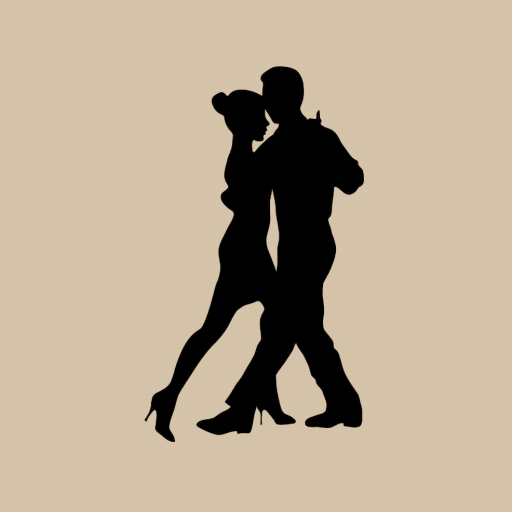
The tango originated in the late 19th century along the Rio de la Plata region of Argentina and Uruguay before spreading worldwide as both a social and ballroom dance. As a dance of passion and intensity, tango is marked by its dramatic character and sharp contrasts. Tango music is in 2/4 or 4/4 time (typically between 120–128 BPM), often featuring accordions, violin, and piano.
How to recognize when to take the first step when dancing Tango?
To recognize when to take your first step, listen for the driving downbeats and staccato accents in the music. Tango rhythm usually emphasizes beats 1 and 3, giving you a strong pulse to step on. The music may include dramatic pauses – use these moments to hold still, accentuate the tension, and then resume with decisive movement.
How to dance Tango?
As a passionate ballroom dance, you should take a closed frame with strong body contact, angled slightly to the left to create room for leg action. Keep your knees soft and your movements grounded, driving each step into the floor. The tango’s character lies in its precision, contrast, and controlled intensity.
Practice now with the Dancebeat app
Get the Dancebeat app now to practice
- recognizing the correct dance for the played music.
- recognizing the dance steps of each dance.
- recognizing the right moment to take your first step.


Sources
- James Mehl: Professional ballroom dance consultant
- Eddington, Marci H., and B. Lee Wakefield. American Social Dance: Syllabus and Progress Chart. Brigham Young University, 2003.
- National Dance Council of America. Compiled Rule Book Master v2 (March 2022). PDF file, National Dance Council of America, 2022.
https://www.ndca.org/ – Compiled Rule Book Master v2.pdf. Accessed 24 Aug. 2025.